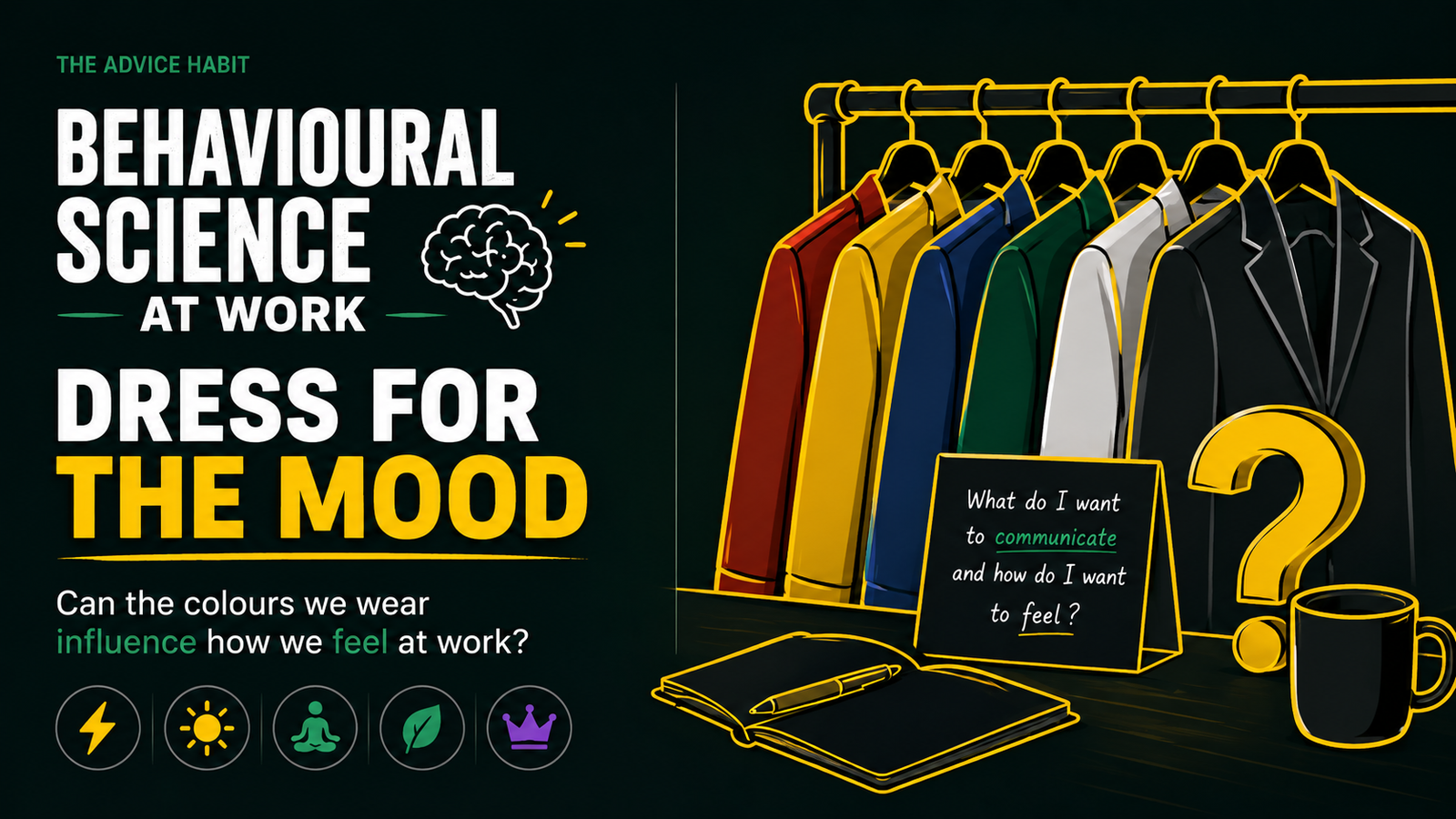
Dress for the Mood: Can What You Wear Influence How You Feel at Work?

Two managers. Same Monday morning.
One walks into the meeting and says:
“Good morning, everyone. Let’s get started.”
Another says:
“Good morning, everyone. I’ve had a hectic morning, so I may seem a little quieter than usual. It isn’t about the team. Let’s focus on today’s priorities.”
The difference seems small.
But the team may experience these two situations very differently.
In the first case, employees may start wondering:
“Are they upset?”
“Did we miss something?”
“Should I bring up that issue today?”
In the second, the manager has provided context. The team doesn’t have to spend energy interpreting the manager’s behaviour.
What changed? Not necessarily the manager’s mood. The communication.
Research by Sigal Barsade found that emotions can spread through teams, influencing cooperation, communication and group performance. This phenomenon is known as emotional contagion.
For managers, this means emotional intelligence isn’t simply a personal skill. It is a leadership skill.
Why Emotional Intelligence Matters for Managers
As a manager, you may think you are simply having a difficult morning, feeling stressed about a deadline or thinking about something outside the meeting.
Your team, however, doesn’t experience your internal thoughts.
They experience your tone, pace, facial expressions and reactions.
A shorter response may sound like irritation.
Silence may be interpreted as disappointment.
A rushed conversation may feel like disinterest.
And when employees aren’t sure what a manager’s behaviour means, they may start filling in the gaps themselves.
This can affect how willing they are to ask questions, share ideas or raise concerns.
The issue isn’t that managers should hide their emotions.
The issue is whether their emotions are being communicated intentionally.
Emotional Contagion in the Workplace: Why Manager Emotions Matter
Emotional contagion describes how emotions can influence the people around us.
In the workplace, a manager’s emotional state can influence the atmosphere of a meeting and affect how employees communicate and collaborate.
The original article also highlights data from India showing that 31% of employees reported experiencing anger and 36% reported experiencing sadness during a large part of the previous day. This makes emotional awareness an important leadership capability, rather than simply a personal one.
This doesn’t mean managers need to appear positive all the time.
It means they need to become more aware of what they bring into the room and how others might experience it.
Before Your Emotions Rule the Room, RULER Your Emotions
One practical approach to developing emotional intelligence in leadership is Marc Brackett’s RULER Framework.
The framework provides a simple structure for becoming more intentional about emotions before leading your team.
R — Recognise
Notice how you are feeling before entering the room.
Ask yourself: “What am I feeling right now?”
You don’t need to change the emotion immediately. First, recognise it.
U — Understand
Explore what may be causing the emotion.
Is it the meeting itself? A difficult conversation? A deadline? Something that happened earlier?
Understanding the trigger can prevent you from unconsciously directing the emotion toward your team.
L — Label
Give the emotion a name.
Are you frustrated? Anxious? Overwhelmed? Irritated? Excited?
Labelling an emotion can make it easier to respond intentionally rather than simply react.
E — Express
Decide how to communicate the emotion appropriately.
You don’t need to share every personal detail. Sometimes a simple statement provides enough context:
“I’ve had a difficult morning, so I may be a little quieter than usual.”
R — Regulate
Take a moment before reacting.
Pause. Take a few breaths. Slow down.
The objective isn’t to suppress the emotion. It is to create enough space to choose your response.
Suggested Visual: The RULER Framework
I recommend presenting the five RULER stages as a branded step-by-step infographic, with each stage paired with its key question or action.
You Don’t Have to Hide Your Emotions
Emotional intelligence at work does not mean pretending everything is fine.
In fact, trying to completely hide your emotions can sometimes make things harder because people may still notice that something is different, and then try to interpret it themselves.
The goal is not emotional perfection.
The goal is emotional clarity.
If your team understands that your quietness is because you’re tired rather than because you’re disappointed with them, they don’t have to spend energy guessing.
As the original article puts it:
“You don’t need to hide your emotions. You need to stop people from guessing what they mean.”
Small Leadership Habits That Make a Big Difference
You don’t need a complicated leadership programme to start improving your manager communication skills.
Small behaviours can make a meaningful difference.
1. Share Brief Context
If your mood may be noticeable, provide simple, work-appropriate context.
“I’ve had a hectic morning, so I may seem a little quieter today.”
2. Keep It Short and Work-Related
You don’t need to explain everything you’re experiencing. Give your team enough information to avoid unnecessary assumptions.
3. Start Meetings With a Quick Check-In
A simple one-word check-in can help people become more aware of how the team is arriving in the room.
4. Ask About Focus
Try asking:
“Is there anything affecting your focus today?”
This creates an opportunity for employees to raise concerns before they affect the conversation.
5. Listen Before Solving
If someone shares a concern, resist the immediate urge to fix it.
Listen first.
Not every concern needs an instant solution.
6. End With Clarity
Before closing a meeting, confirm priorities and next steps so everyone leaves knowing what happens next.
These small leadership behaviours can build trust, reduce assumptions and create an environment where people feel safer contributing.
The Question Every Manager Should Ask
Leadership often focuses on what managers say.
But sometimes the more important question is:
“What does the team experience because of how I show up?”
Before your next meeting, pause and ask:
“What weather am I bringing into this room today?”
Are you bringing urgency?
Frustration?
Calm?
Energy?
Uncertainty?
You don’t have to change every emotion you experience.
But you can become more intentional about how you communicate it.
And when the meeting ends, ask yourself one more question:
“What weather did my team leave with because of me?”
That reflection can become a powerful leadership habit.
Because your team doesn’t only respond to what you say.
They also respond to how you show up.
And sometimes, your mood enters the room before your words do.
Final Takeaway
Emotional intelligence for managers isn’t about eliminating difficult emotions. It is about developing the awareness to recognise those emotions and the ability to communicate and regulate them effectively.
The next time you feel stressed before a meeting, pause.
Ask yourself:
“Is my team going to understand what I am experiencing, or will they have to guess?”
A little context can prevent a lot of assumptions.
A thoughtful pause can prevent an unnecessary reaction.
And a manager who is aware of their emotional impact can create a team environment where people feel more comfortable speaking up, contributing and engaging openly.
Because leadership isn’t only about managing tasks and achieving outcomes.
It is also about managing the emotional environment in which your team does its best work.