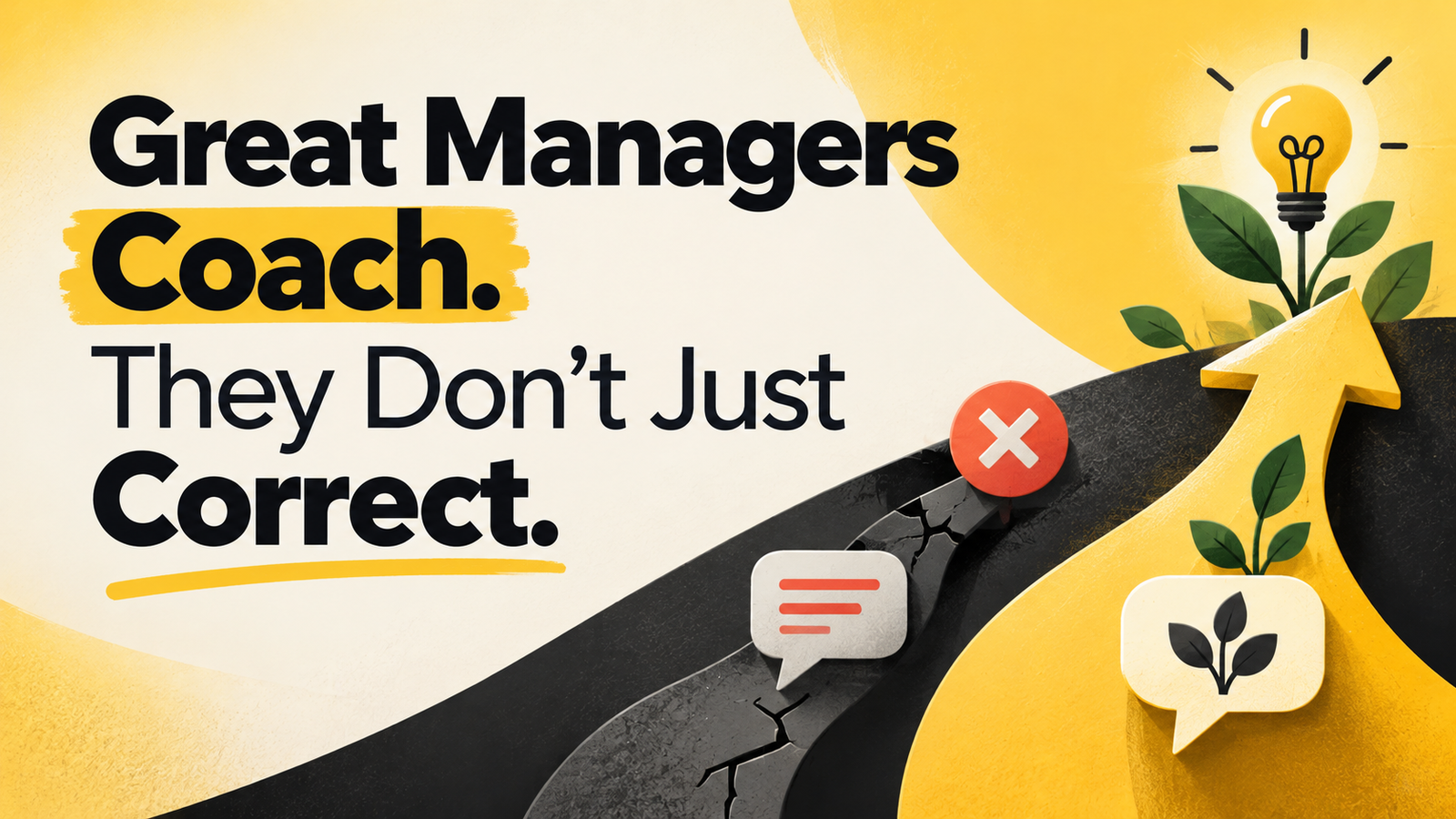
Coaching Skills for Managers: Great Managers Coach, They Don’t Just Correct

Have you ever thought, “It’ll be faster if I do it myself”?
When an employee gets stuck, stepping in with a solution may seem efficient. But what happens when they face the same challenge again?
Effective managers don’t just solve problems. They develop people who can solve them independently. This is where coaching skills for managers become essential.
The Advice Habit: Helping or Holding Back?
When employees approach us with problems, the instinct is often to provide immediate answers. While this saves time initially, repeatedly offering solutions can create dependency and limit independent thinking.
In The Coaching Habit, Michael Bungay Stanier explores how managers can move beyond giving advice to helping employees think through challenges.
Before stepping in, ask yourself:
Am I solving the problem, or helping someone become better at solving problems?
From Micromanagement to Coaching-Based Leadership
Coaching-based leadership encourages employees to take ownership while ensuring they have the support they need.
- Instead of micromanaging: Set clear expectations and allow independent decisions.
- Instead of giving immediate answers: Ask questions that encourage critical thinking.
- Instead of taking work back: Help employees identify solutions and own the outcome.
The goal is not to lower standards, but to build capability, accountability, and trust.
The GROW Coaching Model: A Practical Tool for Managers
The GROW coaching model provides a simple structure for effective coaching conversations:
- G – Goal: What are you trying to achieve?
- R – Reality: What’s happening right now?
- O – Options: What approaches could you take?
- W – Way Forward: What will you do next?
Imagine an employee says, “I’m stuck. What should I do?”
Rather than immediately providing an answer, ask: “What have you tried so far, and what options do you see?”
One thoughtful question can shift the conversation from seeking answers to exploring possibilities.
When Should Managers Coach?
Not every situation requires coaching. Urgent issues may demand direct instructions, while inexperienced employees may need additional guidance.
Effective managers know when to coach, guide, or direct. The objective is to make advice a deliberate choice rather than an automatic response.
From Problem-Solver to People Developer
Strong managerial coaching skills help employees develop confidence, exercise judgement, and take greater ownership of their work.
The next time a team member approaches you with a challenge, pause before taking over. Ask a question. Create space to think. Encourage ownership.
Great managers don’t just correct performance. They coach people to improve it.
Build Better Coaching Skills with TBH Circle
TBH Circle helps organisations strengthen leadership effectiveness through behavioural science, experiential learning, and practical development interventions—empowering managers to build capable, confident, and accountable teams.