Colour Psychology at Work: How Clothing Influences Mood and Confidence

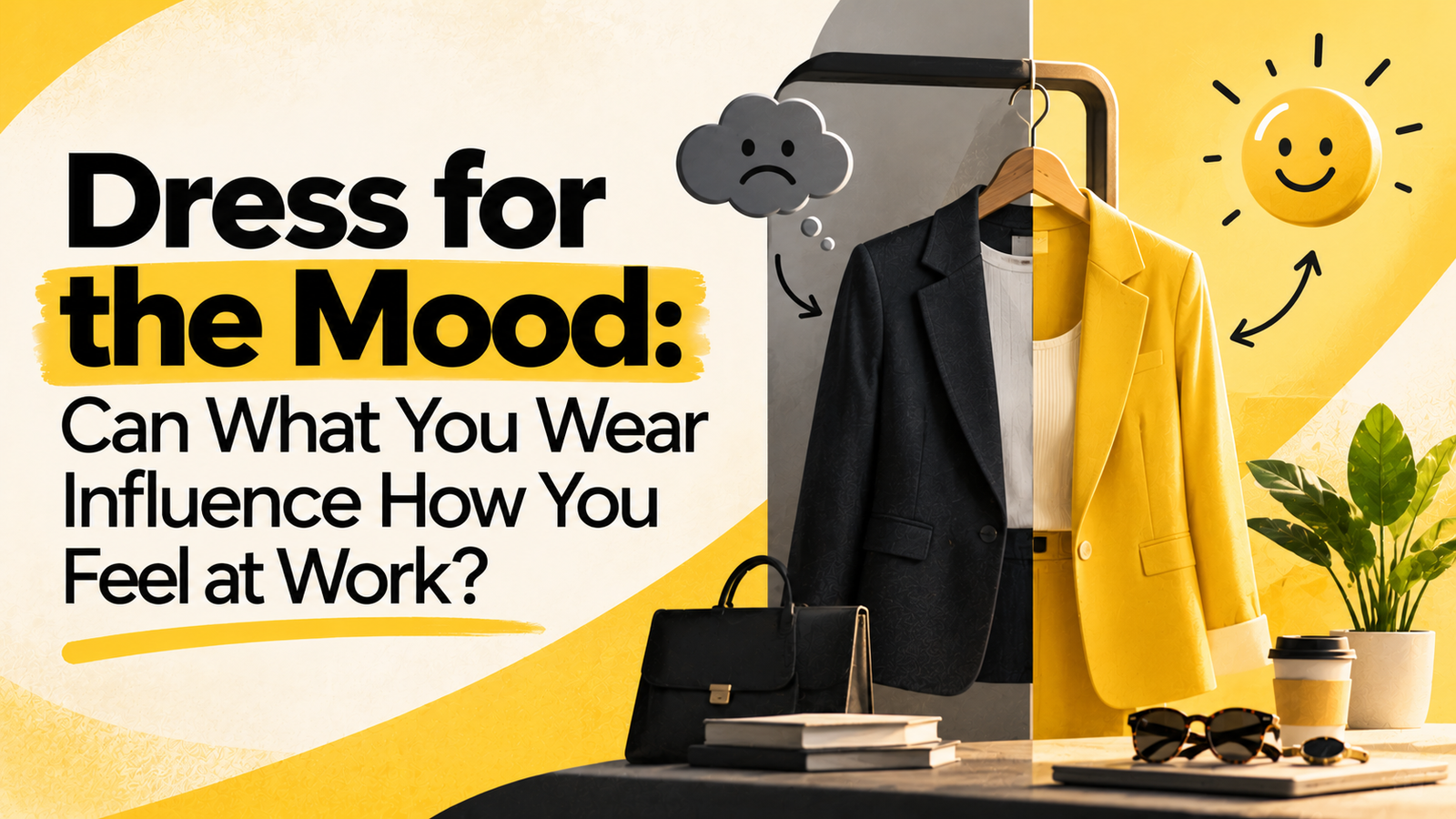
Can what you wear influence how you feel at work?
Think about your next presentation, an important client meeting, or a day when your confidence feels low. Do you choose your outfit differently?
Perhaps a particular colour makes you feel energised, or an outfit helps you feel more prepared.
This raises an interesting question: Can colour psychology and clothing influence workplace behaviour?
Research suggests that colours and clothing can be associated with emotions, self-perception, and first impressions. While these effects aren’t universal, understanding them can help us make more intentional choices.
What Does Colour Psychology Tell Us?
Colour psychology explores how people perceive colours and associate them with different emotions and meanings.
Research has identified patterns in colour–emotion associations, although these vary across cultures and contexts.
Some commonly reported associations include:
- Red: Intensity, high-arousal emotions, and perceived power.
- Yellow and orange: Positive emotions and stimulation.
- Blue and green: Calmness and lower-arousal emotional states.
- Black and grey: Formality, seriousness, or context-dependent emotional meanings.
However, these are associations, not guaranteed outcomes. Wearing blue won’t automatically make you calm, and wearing red won’t instantly boost your confidence.
The meaning of colour depends on context, personal experience, and cultural associations.
The Psychology of Clothing: More Than Appearance
Clothing communicates more than colour. It can influence first impressions and how we perceive ourselves in different situations.
Consider a client presentation, a creative brainstorming session, and a regular team meeting. Each may call for a different approach to workplace attire.
Clothing that feels comfortable and appropriate may help you focus on the task rather than your appearance. An outfit associated with previous successes may also remind you of experiences when you felt capable.
This connects to enclothed cognition—the concept that clothing may influence psychological processes through its symbolic meaning and the experience of wearing it. However, its effects depend on context and should not be overstated.
How to Use Colour Psychology at Work
Instead of following rigid rules about professional colours, consider what helps you feel prepared.
- For confidence: Choose an outfit you associate with feeling capable.
- For calm: Prioritise comfort and colours you personally find soothing.
- For energy: Experiment with brighter colours where workplace norms allow.
- For credibility: Consider formality, fit, comfort, and your audience.
The objective isn’t to force a particular mood. It’s to understand how your choices may influence your experience.
Try This Simple Workplace Experiment
Before your next important workday, ask yourself:
“How do I need to show up today?”
Choose your outfit intentionally. Notice how comfortable and prepared you feel, and whether your approach to work changes.
At the end of the day, reflect: “Did what I wore influence how I showed up?”
Repeat this across different situations to identify your own patterns.
Your Clothes Don’t Define Your Competence
Clothing won’t replace preparation, expertise, or leadership skills. However, understanding colour psychology at work can encourage greater awareness of the personal associations and choices that shape everyday experiences.
At TBH Circle, we explore how psychology and human behaviour influence workplace experiences through experiential learning and practical development interventions.
Sometimes, understanding how we show up begins with understanding the choices we make.